Instant Download
Your unique download link appears right after you complete your purchase, and is also sent instantly to the email address you provided.
Couldn't load pickup availability

Your unique download link appears right after you complete your purchase, and is also sent instantly to the email address you provided.
9780123972828, 0123972825
1
Julien Cohen-Adad, Claudia Wheeler-Kingshott
Elsevier
2014-01-16
330
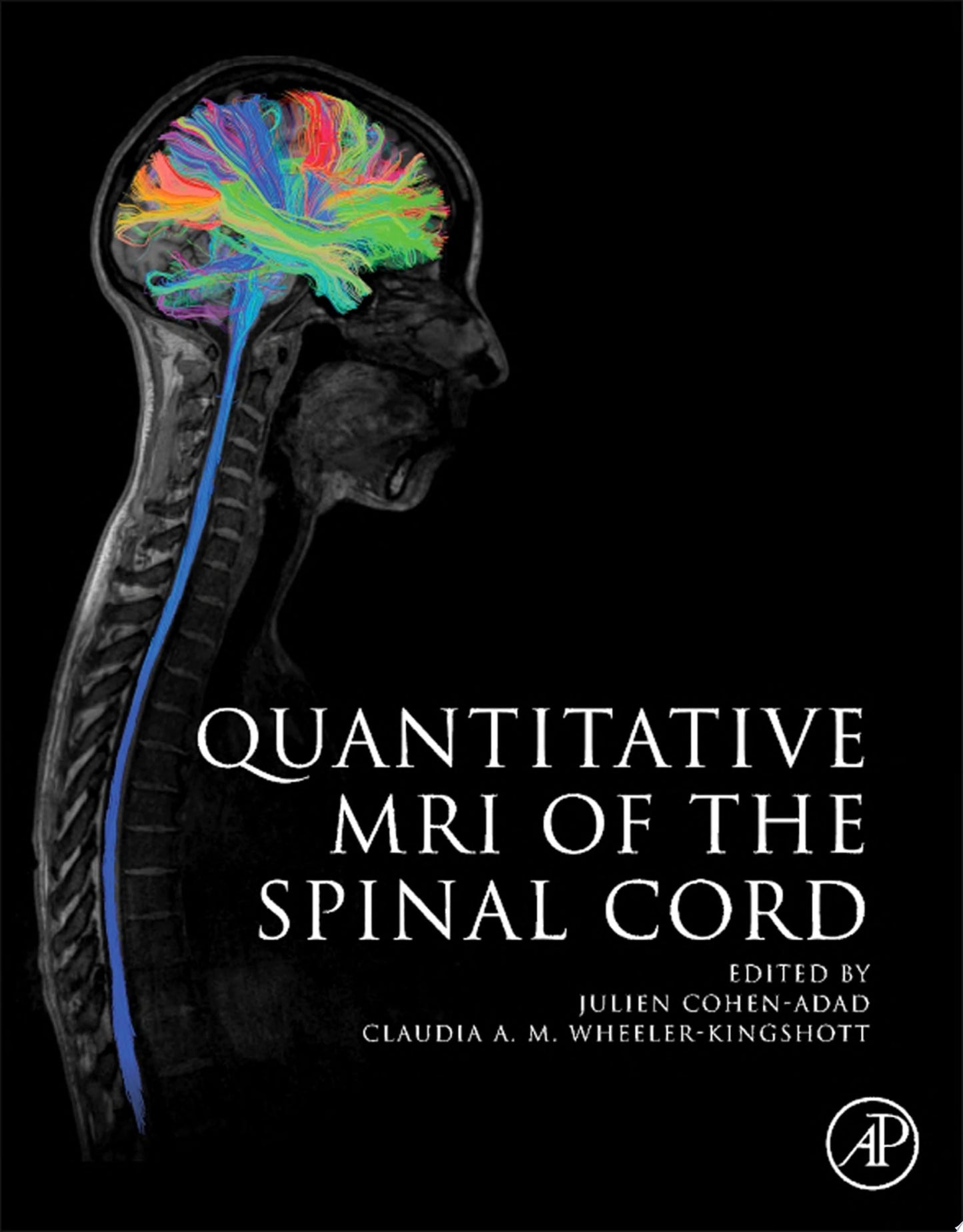
Magnetic resonance imaging (MRI) is very sensitive to the presence of damage resulting from injury or disease, but often lacks specificity. Quantitative MRI can significantly increase the specificity in the presence of pathology but must be validated, often using an animal model, for each type of injury or disease. In the case of spinal cord injury (SCI) most models are difficult to image, either due to the location of the injury, or as a result of damage to surrounding tissues resulting from invasive surgical procedures. This thesis describes a non-surgical model of rat SCI which uses MR guided focused ultrasound and microbubbles to create an injury the cervical spinal cord which is optimal for performing quantitative MRI, and compares it with other models of SCI using MRI, histology, and immunohistochemistry. It also describes the difficulties encountered when implementing the quantitative T2 (qT2) MR sequence at the very high resolution required to image the rat spinal cord, the limitations on the qT2 sequence due to the presence of diffusion, and how the effects of diffusion were minimized. Using the new SCI model and qT2 sequence, qT2 and diffusion data were acquired at 24 hours, 1 week, and 2 weeks following SCI, and the quantitative MRI parameters were correlated with histology. The increased specificity gained using quantitative MRI will increase the information available at each timepoint, reducing both the variability and cost of longitudinal studies aimed at developing treatments for SCI.